The UFDCM explains culture through two observable dimensions: usage (how often data is used) and flow (how freely data moves across teams and domains).
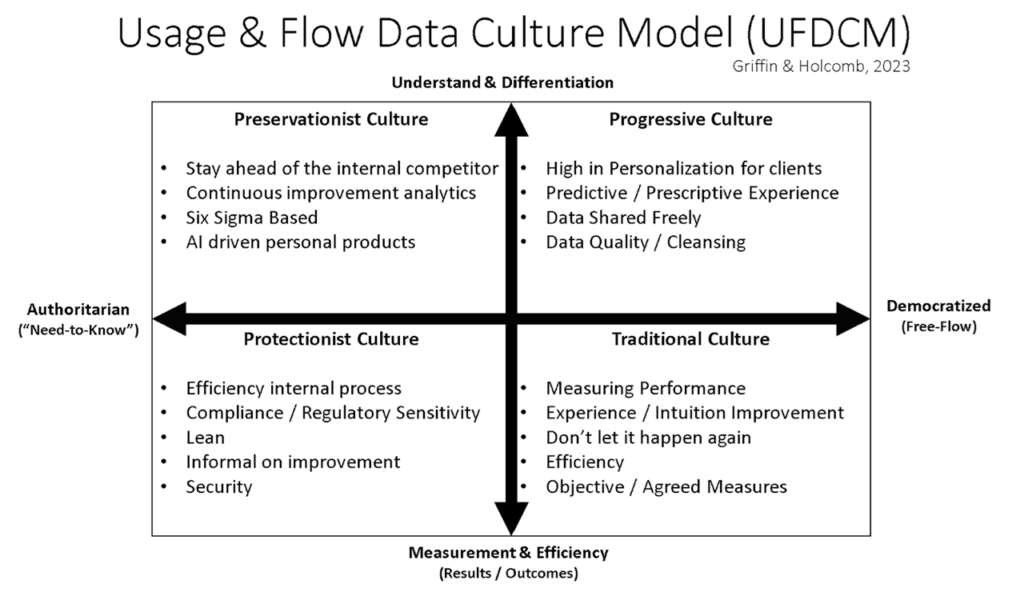
UFDCM uses two axes to characterize data culture:
- Usage: the extent to which governed data is used in decisions, operations, and accountability.
- Flow: the extent to which data moves across boundaries—teams, domains, programs—without friction.
These dimensions yield four archetypes that help practitioners diagnose cultural constraints and prioritize interventions.
- Progressive (high usage, high flow)
- Traditional (low usage, high flow)
- Preservationist (high usage, low flow)
- Protectionist (low usage, low flow)